- info@umbandcoding.com
- 201-942-0949
Learning how to get credentialed as a therapist is the step that turns a licensed clinician into an in-network provider clients can actually use their insurance to see. Until a payer approves your application and issues an effective date, you cannot bill that plan — and claims submitted too early will deny. The process is administrative, not clinical, but it rewards the same habits that make a good practice: complete documentation, consistent information everywhere, and steady follow-up. This guide walks through the six-step panel process, the documents payers expect, and the mistakes that stall applications for months. If you would rather hand the paperwork to a team that does it every day, our credentialing services for therapists handle the applications, CAQH profile, and payer follow-up on your behalf.
Credentialing is how an insurer verifies you are licensed, qualified, and safe to include in its network — why it matters for revenue is covered in our guide on why provider credentialing is necessary for mental health practices.
Getting credentialed means a payer has verified your license, education, work history, and malpractice coverage, and has agreed to list you as an in-network provider under a contract. Three terms get mixed up, so keep them separate: credentialing is the verification itself; enrollment is the payer loading you into its system so claims can process; contracting is the signed agreement that sets your fee schedule and your effective date — the first date you may see that plan’s members as an in-network provider. You are not in-network until all three are done, and the effective date controls your billing: a claim for a session held even one day before it will deny, with generally no way to appeal it into payment.
Most therapists credential individually with each payer, even inside a group practice. The group’s contract does not automatically cover you; your individual Type 1 NPI must be linked to the group’s Type 2 NPI and tax ID before your claims will pay.
Every payer application starts with the same three identifiers, and they must match exactly — character for character — on your application, CAQH profile, NPPES registry, and state license. A mismatch as small as a middle initial is one of the most common reasons applications get sent back.
First, confirm your state license is active and in good standing — payers verify this directly with the licensing board, so do not apply while a renewal is pending. Second, confirm you have an individual Type 1 NPI, the number that identifies you as a rendering provider — apply free through NPPES if you do not have one. Third, choose the taxonomy code that matches your license: 101Y00000X (Counselor), 1041C0700X (Clinical Social Worker), and 103TC0700X (Clinical Psychologist) are the common therapy codes. Also decide how you will bill — under your own tax ID or a group’s — since changing that mid-process usually means starting over.
Nearly every payer requires proof of professional liability insurance before it will credential you, and checks it again at every recredentialing cycle. Most commercial panels ask for $1 million per occurrence and $3 million aggregate, though requirements vary by payer and state — read each application rather than assuming one policy fits all.
Two details trip up new applicants. First, occurrence vs. claims-made policies: an occurrence policy covers incidents from the policy period whenever the claim is filed, while a claims-made policy only covers claims filed while the policy is active — so you need tail coverage if you switch carriers or leave a group. Second, the certificate: payers want the current declarations page showing your name, limits, and effective dates, not an old certificate or a quote. If you work for a group, ask whether its policy covers you individually and lists you by name.

CAQH ProView is the shared credentialing database most commercial payers pull from instead of their own paper application. A complete, current, authorized profile is the single highest-leverage step in the process: payers that use CAQH will not move your application forward until they can pull a clean one.
Build the profile in full: education and training, every license, work history with no unexplained gaps, malpractice history with explanations where required, and all supporting documents — license, malpractice face sheet, DEA registration if you hold one, diploma, and a current CV. Then authorize each payer you are applying to; an application stalled because the payer was never authorized is one of the most avoidable delays in credentialing. Finally, attest to the profile — CAQH requires re-attestation every 120 days, and a lapsed attestation can pause your application. Our CAQH credentialing step-by-step guide covers the four profile mistakes that stall enrollment most often.
Do not apply to every payer in your state — apply to the ones your clients actually use. The two or three dominant commercial plans in your area, plus Medicare and Medicaid if your client base includes them, will cover most demand. Each additional panel adds weeks of follow-up, so prioritize the plans that will fill your schedule first.
Apply to your chosen panels in parallel — applications are independent, and running them together shortens the total time from first application to first paid claim. Before you apply, check whether the panel is open: a closed panel means the payer is not accepting new providers in your specialty or area right now, a capacity decision rather than a judgment on your qualifications. Medicare and Medicaid run on separate tracks: Medicare enrollment goes through PECOS with the CMS-855 form, and Medicaid enrollment is state-specific.
Submitting the application is the halfway point, not the finish line. Payer credentialing departments process applications in queues, and one with a small defect — a missing document, an unverified reference, an unanswered question — can sit silently for weeks. The fix is a disciplined cadence: a check-in within a week to confirm the application was received and is complete, then follow-ups every one to two weeks until you have a decision in writing.
Every call should produce a record: the date, the representative’s name, the reference or case number, and exactly what was said — especially what is still missing and who is responsible for providing it. If a document is missing, send it the same day and confirm receipt. As a planning range, Medicare enrollment commonly takes 60 to 90 days and commercial credentialing 90 to 120 days, but both ranges depend on the payer and the completeness of your file. Our guide to how long provider credentialing takes breaks those timelines down payer by payer.
When a payer approves you, it sends a contract. Read it before you sign, and check four things: the fee schedule for the CPT codes you actually bill (for therapy, usually 90837, 90834, and 90832) and how the payer handles telehealth; the effective date, confirmed in writing — do not schedule in-network sessions before it; the termination clause and how much notice either side must give; and the recredentialing cycle, usually every two to three years. Once signed, confirm the enrollment is actually active before your first claim: your NPI and tax ID loaded in the payer’s system, your rendering NPI linked to the correct billing NPI, and your name in the provider directory. A quick eligibility check or call to provider services confirms all three in minutes.
| Step | What to prepare | What most often slows it down |
|---|---|---|
| 1. License, NPI, taxonomy | Active license, Type 1 NPI, correct taxonomy code | Mismatched name or NPI across documents |
| 2. Malpractice coverage | Current policy, usually $1M/$3M limits | Expired certificate or missing tail coverage |
| 3. CAQH ProView profile | Complete profile, documents uploaded, payers authorized, attested | Incomplete profile or lapsed attestation |
| 4. Panel applications | Applications to open panels, in parallel | Applying to a closed panel |
| 5. Follow-up | Reference numbers, call log, missing-item list | Silent stalls with no check-ins |
| 6. Contract and effective date | Fee schedule reviewed, effective date confirmed | Billing before the effective date |
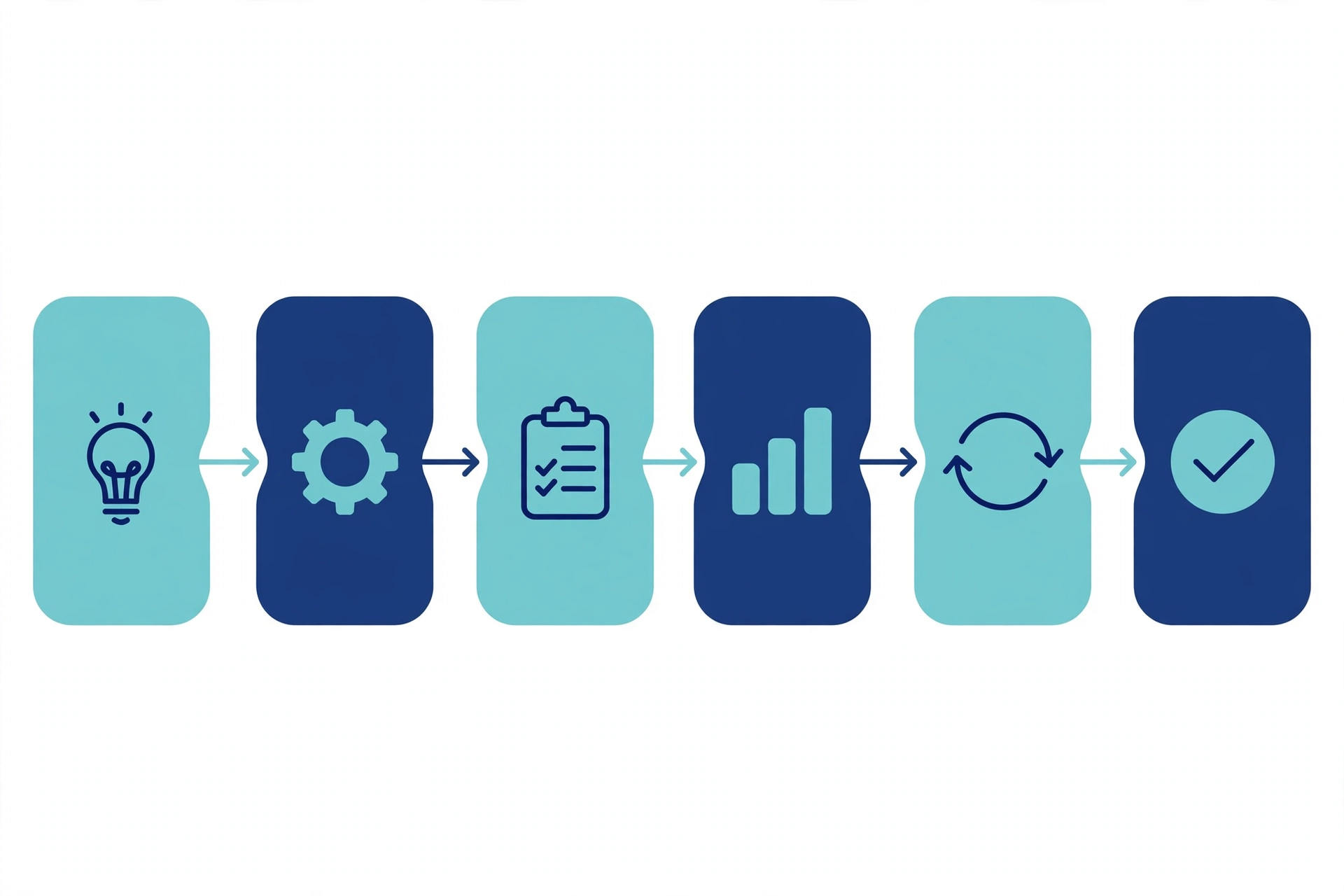
Most credentialing delays are administrative, not a reflection of your qualifications.
1. Inconsistent information across sources. Your name, NPI, taxonomy code, and practice address must be identical on the application, CAQH, NPPES, and your license — even a suite number written two ways can trigger a verification hold.
2. An incomplete CAQH profile. Blank fields, missing documents, or a profile never attested will stop a payer from pulling your file. Complete it once, authorize each payer, and re-attest every 120 days.
3. Gaps in work history or unexplained disclosures. Any gap of more than a few months, or a malpractice event with no explanation, generates a follow-up question — and the application waits while you answer it. Explain gaps when you apply.
4. Applying to a closed panel. A closed panel is a capacity decision, not a rejection you can appeal. Check panel status before applying.
5. Billing before the effective date. Sessions held before your contract’s effective date are not payable by that plan, and the denial that follows is generally not appealable. Wait for the effective date in writing first.
Plan on 90 to 120 days for a commercial payer from a complete application to an effective date, and 60 to 90 days for Medicare. Incomplete applications, closed panels, and slow verification can extend either range — so start four to six months before you need to bill in-network.
No. Credentialing only matters for billing insurance. If a client pays your full fee directly and you do not submit claims, no payer approval is needed. Many therapists start private-pay while applications are pending.
Yes, but the group’s contract does not cover you automatically. You still need your own Type 1 NPI and credentialing file with each payer, with your rendering NPI linked to the group’s Type 2 NPI and tax ID.
CAQH ProView is the credentialing database most commercial payers use instead of their own paper applications. Most therapists need a complete, attested, payer-authorized profile — re-attested every 120 days.
Usually an administrative problem — a blank field, a mismatched NPI or tax ID, a missing document, or an expired CAQH attestation — not a rejection of your qualifications. Fix the item flagged, re-attest CAQH if needed, resubmit, and track the new reference number. A closed panel is different: a capacity decision — ask for reconsideration instead.
Getting credentialed as a therapist is a six-step process, and the therapists who finish it fastest treat it like a project: complete file first, panels chosen deliberately, applications in parallel, follow-up every week until the effective date is in writing. Start four to six months before you need to bill in-network, keep CAQH attested, and never bill before your effective date.
If the paperwork is standing between you and your first in-network clients, UMB and Coding can take it over — applications, CAQH, payer follow-up until each case is closed, and recredentialing reminders so you never lapse. Call (201) 942-0949 or reach out through our contact page to get started.


Leave a comment