If you’re a mental health or medical provider trying to grow your practice, there’s one word you’ll hear again and again: credentialing. It might sound like just another piece of paperwork, but skipping it or getting it wrong can quietly cost your practice thousands of dollars in denied claims and lost patients.
Let’s break down what credentialing actually is, why it matters so much, and what happens when practices don’t take it seriously.
What Is Provider Credentialing, Really?
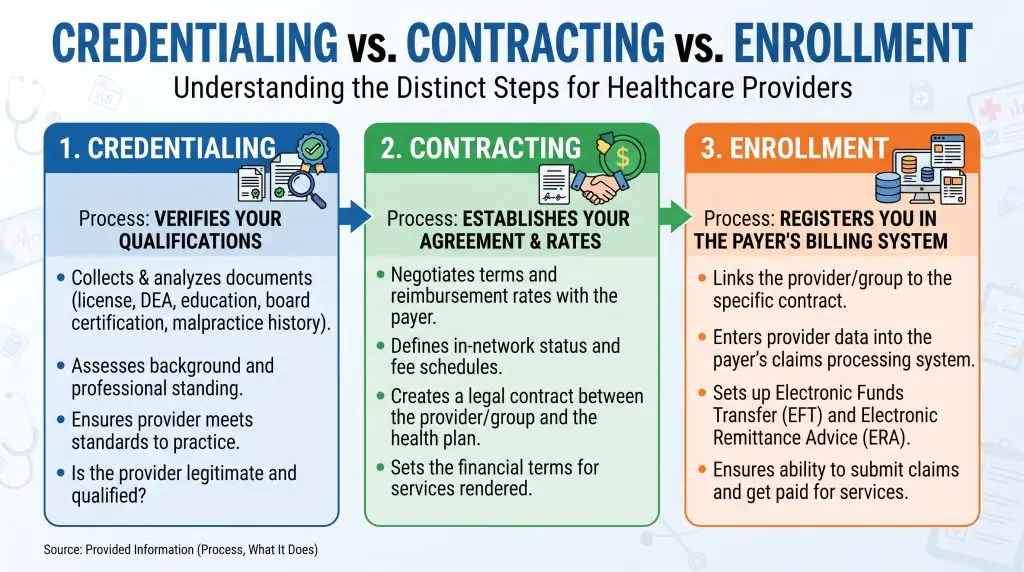
In simple terms, credentialing is the process that gets your practice approved by insurance companies so you can treat insured patients and get paid for it.
Insurance companies won’t just take your word for it that you’re a qualified provider. They verify your license, education, specialty training, certifications, and work history before letting you join their network. Think of it as the background check that opens the door to insurance reimbursement.
For example: if a Psychiatric Mental Health Nurse Practitioner (PMHNP) wants to accept Aetna, UnitedHealthcare, Cigna, or Medicaid patients, they typically need to complete each payer’s credentialing and enrollment process before the practice can bill for services under that provider’s name.
5 Reasons Credentialing Is Non-Negotiable
1. It Verifies Your Qualifications
Credentialing confirms to payers—and indirectly to patients—that you meet professional standards. It’s proof that you are who you say you are, with the training and licensure to back it up.
2. It Gets You In-Network
Once you’re credentialed and contracted, you can treat patients at agreed-upon rates as an in-network provider. This is the gateway to a steady stream of insurance-paying patients.
3. It Unlocks Reimbursement
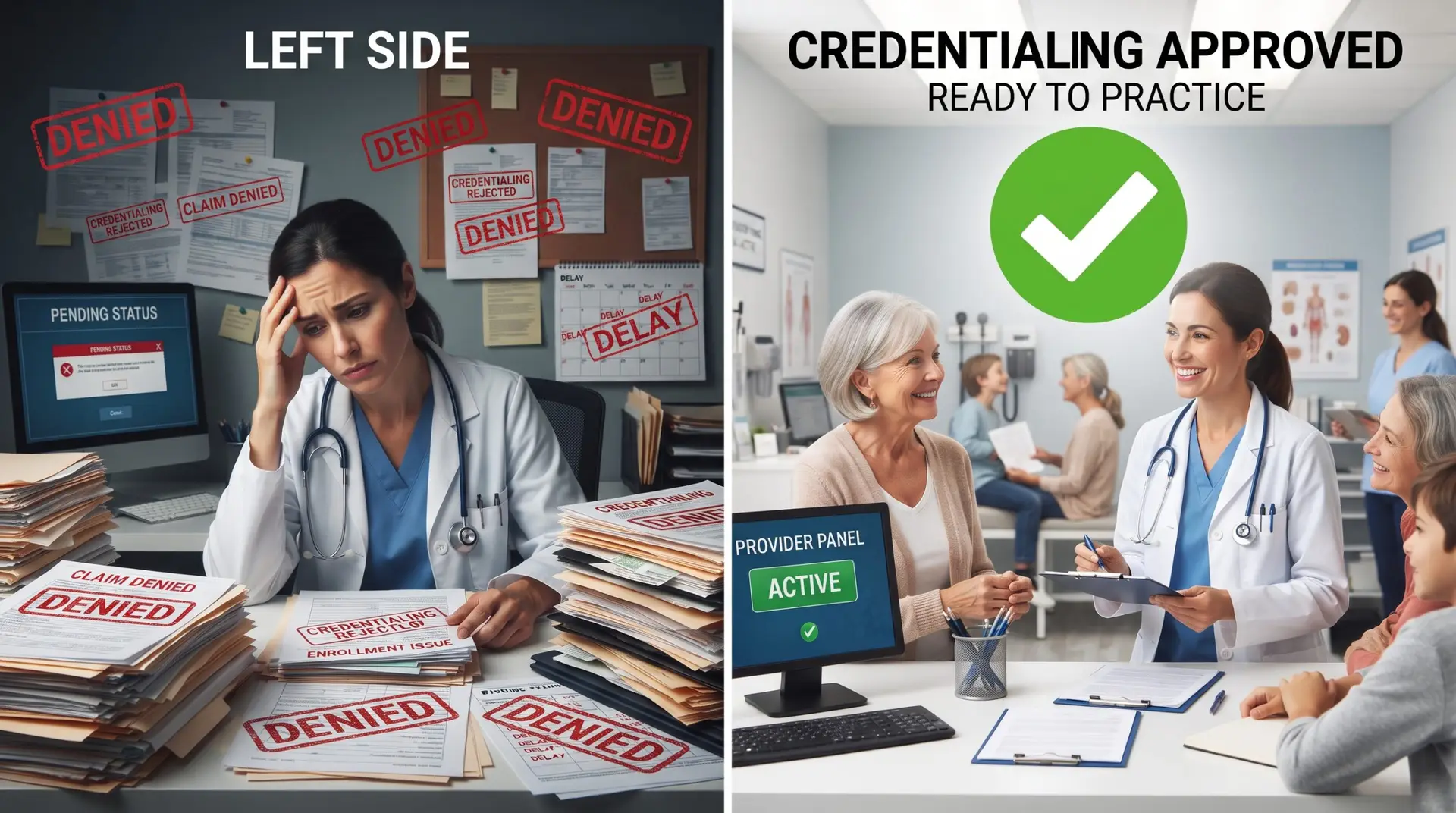
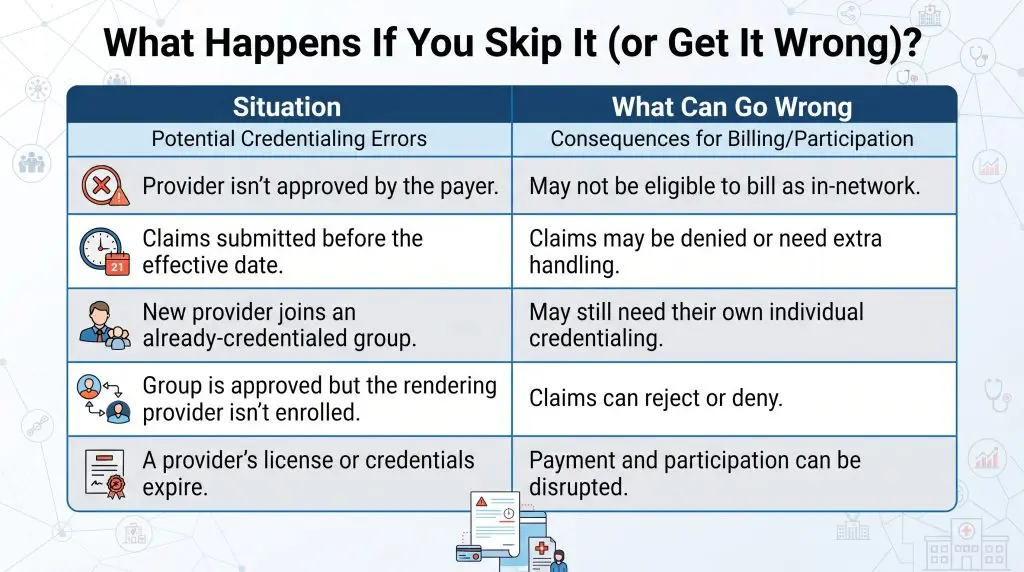
This is the big one. Without proper credentialing and enrollment, your claims can be denied outright—even if the care you provided was excellent. Your eligibility to bill under your NPI or group arrangement depends entirely on this process being done correctly.
4. It Attracts More Patients
Most patients search for “in-network providers” before booking an appointment. Being credentialed means you show up in those searches and become accessible to people who want to use their insurance benefits rather than pay out of pocket.
5. It Helps You Grow
Credentialing isn’t a one-time hurdle—it’s the foundation for scaling. As you bring on new providers or expand your services, proper credentialing keeps your billing predictable and your revenue flowing.


Leave a comment