- info@umbandcoding.com
- 201-942-0949
Most practices treat denials as a cleanup job: a pile of rejected claims worked whenever someone has a spare hour, usually weeks after the payer first said no. That is exactly why denial rates stay high. Denial management in medical billing is not a cleanup — it is a weekly operating process with a fixed cadence, a triage rule, and a feedback loop that stops the same denial from happening again. Practices that run it that way typically stay below 5%; practices that do not watch it climb past 10%. This guide covers benchmarking, categorization, root-cause fixing, the 48-hour rule, appeal deadlines, and weekly KPIs. It reflects the day-to-day work of medical billing services that manage denials across multiple specialties and payers.
Your denial rate is the share of submitted claims a payer denies on first pass: denied claims divided by total claims submitted over the same period. It is the most useful number in revenue cycle management: every denied claim costs staff time, delays payment by weeks, and risks never being paid if an appeal deadline passes. Yet many practices cannot state theirs, because they track denials as a dollar total rather than a rate, or mix true denials with rejections — claims that never entered the payer’s system. Rejections are a different problem and should be counted separately.
Measure cleanly: count only adjudicated denials (the payer received the claim and refused payment, with a Claim Adjustment Reason Code, or CARC, on the remittance) in the numerator, and all claims submitted in the denominator. A well-run practice keeps its first-pass rate under 5%; 5–10% is the warning zone. Industry surveys, including Experian Health’s research, have found more than 40% of providers report rates at or above 10% — one dollar in ten delayed, reworked, or lost. If your rate sits there, you have a process problem, and it is fixable.
| First-pass denial rate | What it usually means | What to do |
|---|---|---|
| Under 5% | Clean claims process is working; denials are mostly payer-specific exceptions | Maintain the cadence; work exceptions weekly and track trends by payer |
| 5–10% | Warning zone; one or two recurring causes are inflating the rate | Categorize the last 90 days of denials and attack the top two categories |
| Over 10% | Systemic upstream problem — eligibility, coding, authorization, or documentation | Run a full root-cause review; fix the front-end workflow, not just the denials |
| Unknown | No reliable measurement, so improvement cannot be distinguished from luck | Build the denial report first — by CARC, payer, and provider |
A headline rate hides where the problem lives: 7% overall can mean 2% at most payers and 20% at one. That is why categorization matters more than the headline number.
Every denial arrives with a reason code, but reason codes describe symptoms, not causes. CO-16 (claim lacks information) can mean a missing modifier, a missing attachment, or an invalid diagnosis pointer — three different fixes. Categorize instead by root-cause family, assigning each family an owner and a fix.
Five families cover nearly all denials. Eligibility and registration errors: no coverage on the date of service, wrong plan billed, or demographics mismatching the payer’s file. Authorization failures: no authorization, an expired authorization, or units exceeding approval. Coding and documentation errors: wrong or missing modifiers, diagnosis-procedure mismatch, or insufficient documentation. Contracting and credentialing problems: the provider was not enrolled with that payer on the date of service. And payer processing errors: the payer applied the wrong edit or denied something the contract covers — the only family where the fix is an appeal, not a workflow change.
Run the categorization on the last 90 days of denials, not the last week: a week’s sample is too small to separate pattern from noise. Sort into the five families, then rank by dollars at risk and count. In most practices, the top two families account for more than half of all denials — that ranking is your work plan. Practices expecting a coding problem often discover an eligibility problem, and practices blaming one payer often find the same error hitting every payer, pointing to an internal workflow. For specialty-specific examples, see our guide to behavioral health claim denials, where authorization and time-based coding rules drive most rejections.
Reworking a denied claim recovers one payment. Fixing its root cause prevents the next fifty. That distinction is the whole discipline of denial management, and it is where most practices stop short: they work the denial, rebill it, and move on, so the same error recurs next week with a new patient. A root-cause process adds one step after every denial is worked: ask what upstream change would have prevented it, and assign that change to someone with a date.
Take CO-97 (benefit included in another procedure) recurring on same-day procedure claims. Reworking each claim means checking for a modifier and rebilling. Root-causing it means asking why the modifier was missed: coder unaware of the bundling edit, code pair missing from the edit table, or note failing to document the separate service. Each leads to a different permanent fix — training, an edit-table update, or a template change. The same logic applies to eligibility denials (real-time checks at scheduling and check-in), authorization denials (a tracker with expiry alerts), and credentialing denials (an enrollment checklist blocking scheduling until enrollment is confirmed).
Log root-cause fixes like denials: family, cause, fix, owner, and date. Review monthly. A cause appearing three times was not actually fixed — the fix was wrong or never implemented. That monthly review is the feedback loop turning denial management from rework into prevention, and it is the step most commonly skipped.

The 48-hour rule is simple: every new denial is touched within two business days of appearing on the remittance. Not resolved in two days — touched: read, categorized, and assigned, with the next action and its deadline recorded. The rule exists because denials age badly. A denial worked in week one is usually a straightforward correction or appeal. A denial discovered in week six is often a race against a timely filing or appeal deadline, and one discovered in month four may be unrecoverable at any price.
Running the rule requires a daily or twice-weekly remittance review, not a monthly one. Assign one person to pull new denials each Monday and Thursday at minimum, sorting them into three queues: correct and rebill (a fixable error on your side), appeal (the payer is wrong and documentation supports it), and investigate (cause unclear, needs a payer call or chart review). Corrections go out the same week; appeals are drafted within the week, since windows run from the denial date, not the date you noticed it; investigate items get a payer call within five business days, logged with a reference number.
The rule also protects against denials nobody owns. Without a named owner, easy denials get worked and hard ones — appeals needing documentation, payer errors needing a supervisor call — sit untouched until they expire. Name one owner per queue, with a weekly report to the practice manager.
Every denial that deserves an appeal carries a clock, and the clocks differ by payer type — which is why a single “appeal everything in 90 days” habit loses claims. Medicare generally allows 120 days from the remittance date to request a redetermination, the first level of appeal. Medicaid deadlines are set by each state and are often shorter, sometimes 60 to 90 days. Commercial payers typically allow 90 to 180 days, but the exact window is in the provider contract and the payer’s manual, and some plans set it as short as 60 days. Corrected claims have their own, separate deadlines, usually shorter than appeal deadlines — a corrected claim submitted after the timely filing limit will deny again, this time for a reason you cannot appeal.
Appeal quality matters as much as speed. A successful packet contains exactly what the payer asked for: the original claim, the remittance, the relevant note excerpt with the supporting passage highlighted, and a short cover letter citing the denial reason, the contract provision supporting payment, and the outcome requested. Burying the key page in a 40-page chart dump invites a second denial. Where a denial has already aged, work it alongside your other aging claims — our 90-day claims recovery playbook covers triaging aged claims by filing deadline. Also check the companion deadline: timely filing limits for the original claim, tabulated by payer in our timely filing limits guide.
A denial process without weekly numbers drifts. Five KPIs, reviewed in a 15-minute weekly meeting, are enough. First, the first-pass denial rate, overall and by payer, as a trend. Second, denial dollars by category, so the team works the largest exposure first. Third, average days from denial to resolution, by queue. Fourth, appeal success rate: the share of appealed dollars overturned. Below 50% suggests appeals filed without adequate documentation, or denials that should have been corrected being appealed instead. Fifth, repeat denials — same reason code, same payer or procedure, within 90 days. That number directly measures whether root-cause fixing is working: it should fall month over month.
| KPI | Healthy target | Review cadence |
|---|---|---|
| First-pass denial rate | Under 5% | Weekly trend, monthly by payer |
| Denials touched within 48 hours | 100% of new denials | Weekly |
| Average days, denial to resolution | Under 14 days (correct-and-rebill); under 30 days (appeal filed) | Weekly |
| Appeal success rate (dollars overturned) | Over 60% | Monthly |
| Repeat denials (same cause, 90 days) | Falling month over month | Monthly |
| Denials over 90 days old, unresolved | Near zero; every item has a named owner and a deadline | Weekly |
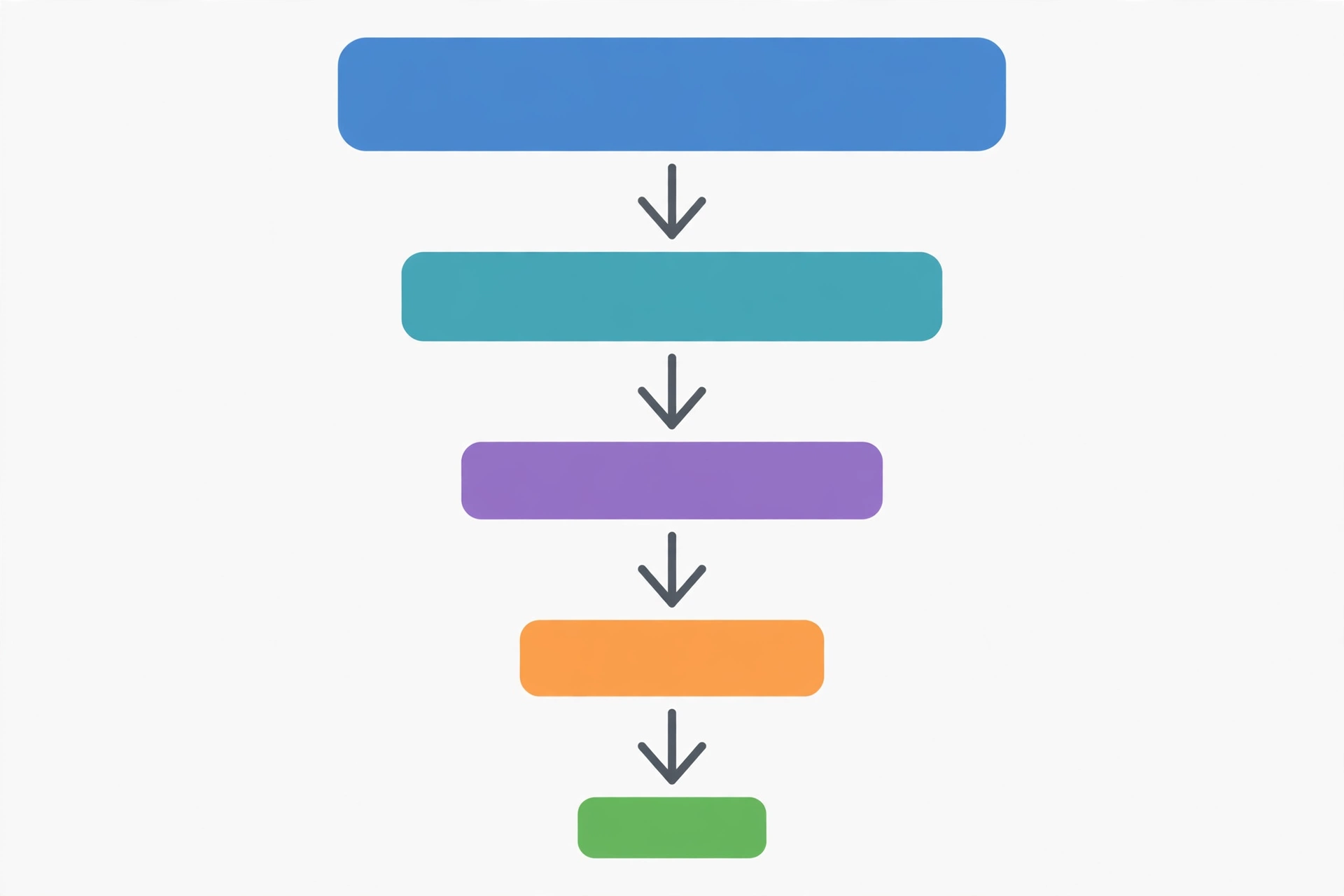
Put the process on a calendar, or it will lose to everything else. Monday: pull new denials, categorize them, and assign each to its queue with a next action and deadline. Tuesday to Thursday: work the queues — corrections and rebills first, appeal packets second, payer calls third — and log a root cause and fix for every item closed. Friday: review the KPIs in 15 minutes with the practice manager, check the over-90-day list for anything without an owner, and confirm next week’s payer calls are scheduled. Monthly: review the root-cause log and verify that the top two denial families shrank.
A practice submitting 500 claims a month at 10% faces 50 denials a month — roughly two to three hours of focused work a week once the process is running, not a full-time hire. When volume or complexity outgrows in-house capacity, outside help pays for itself, bringing payer-specific edit knowledge and a workflow that is already built.
Denial management is tracking every denied claim, categorizing it by root cause, correcting or appealing it within payer deadlines, and fixing the upstream workflow so the same denial does not recur.
A first-pass rate under 5% is healthy for most practices. Rates of 5–10% signal one or two recurring problems; above 10% usually indicates a systemic upstream issue.
A rejection means the claim never entered the payer’s adjudication system — usually a formatting or eligibility error — and is returned within a day or two. A denial means the payer received and adjudicated the claim and refused payment, with a reason code on the remittance.
Medicare generally allows 120 days from the remittance date for a redetermination, Medicaid deadlines vary by state (often 60 to 90 days), and commercial payers typically allow 90 to 180 days under contract. Corrected-claim deadlines are separate and usually shorter — check both clocks first.
No. Appeal when the payer is wrong and documentation supports payment. When the error is yours — wrong code, missing modifier, expired authorization — correct and rebill instead; appealing your own error wastes the window and usually produces a second denial.
Consider outside help when denials stay above 10% despite a real weekly process, when aging AR over 90 days keeps growing, or when staff cannot work denials within 48 hours. Judge a team on the same KPIs you track internally, not on claim volume alone.
Denial management pays off in a specific order: measure your rate, categorize 90 days of denials by root cause, work every new denial within 48 hours, and track five KPIs weekly until repeat denials fall. The practices that lower their rates are not the ones with the cleverest appeals — they fix the cause once and stop reworking the same claim every month. If your rate is stuck above 5%, a denial audit is the fastest way to find out why. Contact UMB and Coding or call 201-942-0949 to request one — and bring your last 90 days of remittances, because that is where the answer already sits.


Leave a comment