- info@umbandcoding.com
- 201-942-0949
Most denied claims are not denied because the care was unnecessary or the patient was uninsured. They are denied because something on the claim itself was wrong: a code that no longer exists, a diagnosis that does not support the procedure, a modifier that was left off, or a note that does not back up what was billed. The good news is that these errors are fixable — and once you know which ten to look for, most are preventable before the claim ever leaves your office.
This guide covers the ten medical coding errors that trigger denials most often, with a claim example, the denial signal, and the fix for each. If coding review is eating into clinical or front-desk time, UMB and Coding’s medical coding and credentialing services can audit your claims, correct recurring errors at the source, and keep your code sets current.
Use this table as a triage reference. When a denial lands, find the pattern below first — the fix is usually in the same row, not in a payer phone call.
| # | Error | Typical denial signal | Fix in one line |
|---|---|---|---|
| 1 | Outdated or deleted codes | Invalid code; claim rejects outright | Update code sets and EHR picklists every January and October |
| 2 | Vague or unspecified diagnoses | Medical necessity denial (CO-50) | Code to the highest specificity the note supports |
| 3 | CPT–ICD-10 mismatch | CO-50; procedure not covered for diagnosis | Check medical-necessity pairing before submission |
| 4 | Missing or wrong modifier | CO-4; bundled or priced incorrectly | Apply the modifier the documentation actually supports |
| 5 | Unbundling and NCCI violations | CO-97; included in another service | Bill the comprehensive code, not its components |
| 6 | Upcoding and downcoding | CO-50, audit flags, or lost revenue | Code the level the documentation proves — no more, no less |
| 7 | Documentation that does not support the code | CO-50, CO-16, or records request | Document time, complexity, and medical decision-making |
| 8 | Duplicate claims | CO-18 duplicate denial | Check claim status before resubmitting; correct, don’t duplicate |
| 9 | Wrong patient, payer, or demographic data | CO-16, eligibility, or CO-31 rejections | Verify eligibility and demographics at every visit |
| 10 | Wrong place of service or units | CO-16, CO-151, or unit-count denial | Match POS and units to where and how much care was given |
Three errors sit at the top of nearly every denial report, and all three happen before a human at the payer ever looks at the claim. They are system errors: the code does not match the code set the payer is using, or it does not justify the service billed.
CPT codes change every January 1, and ICD-10-CM codes change every October 1. A code that paid cleanly last year can reject automatically this year if it was deleted or revised — and a deleted code is an auto-reject, not a denial you can appeal away. The usual culprit is a saved favorite, a copied prior note, or an EHR picklist never updated after the annual change. Fix: run a code-set update every January (CPT/HCPCS) and October (ICD-10), and retire deleted codes from picklists, charge masters, and superbills at the same time — adding new codes alongside old ones just reintroduces the error.
Unspecified ICD-10 codes — those ending in .9 or .90 — tell the payer almost nothing about why the patient was treated. Payers increasingly deny them for lack of medical necessity, especially for procedures, imaging, and therapy, even when the care was entirely appropriate. Usually the diagnosis was not wrong; the coder stopped one level short of the specificity the chart already contained. Fix: code to the highest level of specificity documented — laterality, site, severity, and cause where the note supports them. When the note genuinely does not support a more specific code, that is a documentation conversation with the provider, not a reason to guess.
Every procedure needs a diagnosis that justifies it under the payer’s medical-necessity rules, often published as Local or National Coverage Determinations (LCDs/NCDs). When the diagnosis does not support the procedure — or supports a different one — the claim denies with CO-50, even if both codes are individually valid. Fix: check the pairing, not just the individual codes, before submission. Confirm the diagnosis is the one that prompted the service, verify it against the payer’s coverage policy for that procedure, and sequence the primary diagnosis first.
Modifiers and bundling rules decide whether the payer reads your claim the way you meant it. Get them wrong and a legitimate service looks like a duplicate or a component of something else.
Modifiers explain the circumstances of a service: that two procedures were distinct, that a service was reduced, that telehealth was used, or that an assistant was involved. A missing modifier 25 on a significant, separately identifiable E/M service performed the same day as a procedure is one of the most expensive single omissions in outpatient billing — the E/M service is bundled and lost. A wrong modifier is worse, because it misrepresents what happened. Fix: never append a modifier by habit; each one needs a documented reason.
Many procedures include component services by definition — you cannot bill the parts separately when you have billed the whole. The NCCI edits list code pairs payers will not pay together, and billing both without a valid modifier and a genuine separate circumstance triggers a CO-97 denial. Repeated unbundling also draws auditor attention. Fix: bill the comprehensive code when one exists, run NCCI edits in your scrubber before submission, and document the distinction clearly when two services genuinely are distinct.
Here, coding errors become compliance risk: if an auditor reads the note and cannot find the service you billed, the payment is at risk.
Upcoding bills a higher level of service than the documentation supports — a longer visit or a more complex procedure than the work performed. Downcoding is the mirror image: billing below the level actually performed, usually out of caution, which quietly underpays the practice visit after visit. Both are errors, and upcoding carries audit and repayment risk on top of denial risk. Fix: code from the note, using time or medical decision-making as the E/M level driver — whichever the documentation actually supports. Audit a sample of each provider’s E/M levels quarterly; a provider who is always at the top or always at the bottom of the range usually has a coding habit, not a patient-mix difference.
This is the most common root cause behind CO-50 and records-request denials, and it is often a workflow problem rather than a knowledge problem. The provider did the work but did not write down the elements the code requires: the time spent, the complexity of the decision, the indication for the test, or the plan that justifies the follow-up interval. Fix: give providers code-specific documentation checklists for their most-billed services, not generic “document better” advice — a therapy note template that prompts for time, a procedure note that prompts for indication and findings, and a same-day review of unsigned or incomplete notes.
The last three errors are process failures, not coding-knowledge failures — which makes them the cheapest to eliminate, usually with a checklist and a status check.
When a claim does not appear paid, the instinct is to send it again. If the original is still processing, the resubmission denies as a duplicate (CO-18) — and now the practice has two claims in the payer’s system and sometimes a delayed payment while the payer sorts out which is real. Duplicates also pile up when a corrected claim is sent as a new claim instead of a corrected claim with the proper frequency code. Fix: check claim status before resubmitting, and send corrections as corrected claims (frequency type 7) referencing the original. Our guide to timely filing limits by payer explains why chasing a duplicate can cost you the filing window on the real claim.

A transposed digit in a member ID, a misspelled name, a wrong date of birth, or an outdated insurance card will reject or deny a perfectly coded claim. Eligibility errors are especially costly because they are discovered after the visit, when the correct payer information is harder to obtain — and because the claim may have been sent to the wrong payer entirely, burning filing time. Fix: verify eligibility and benefits before every visit, not just at intake, and scan the insurance card at each visit rather than relying on the record on file. A pre-submission edit flagging eligibility mismatches prevents denials no coding expertise can fix after the fact.
Place of service (POS) tells the payer where care happened — office, telehealth, hospital, or elsewhere — and many codes pay differently, or only pay, in certain settings. Billing an office POS for a telehealth visit, or vice versa, is a denial waiting to happen. Units errors are similar: billing one unit when the service was performed twice, or billing per-15-minute units as if they were per-visit units, either underpays the practice or triggers a unit-count denial. Fix: confirm POS at scheduling and again at charge entry, especially for telehealth, and calculate units from the documented time or quantity — never from habit.
Fewer than half of practices review their coding quarterly, and that gap is why the same ten errors recur: without regular review, a single bad habit repeats on hundreds of claims before anyone notices. A practical cadence is a monthly review of top denial reasons by code, a quarterly sample audit of ten claims per provider, and a full code-set review every January and October. Log each finding — error type, provider, payer, and fix. Our denial management process guide explains how to categorize denials and fix them upstream.
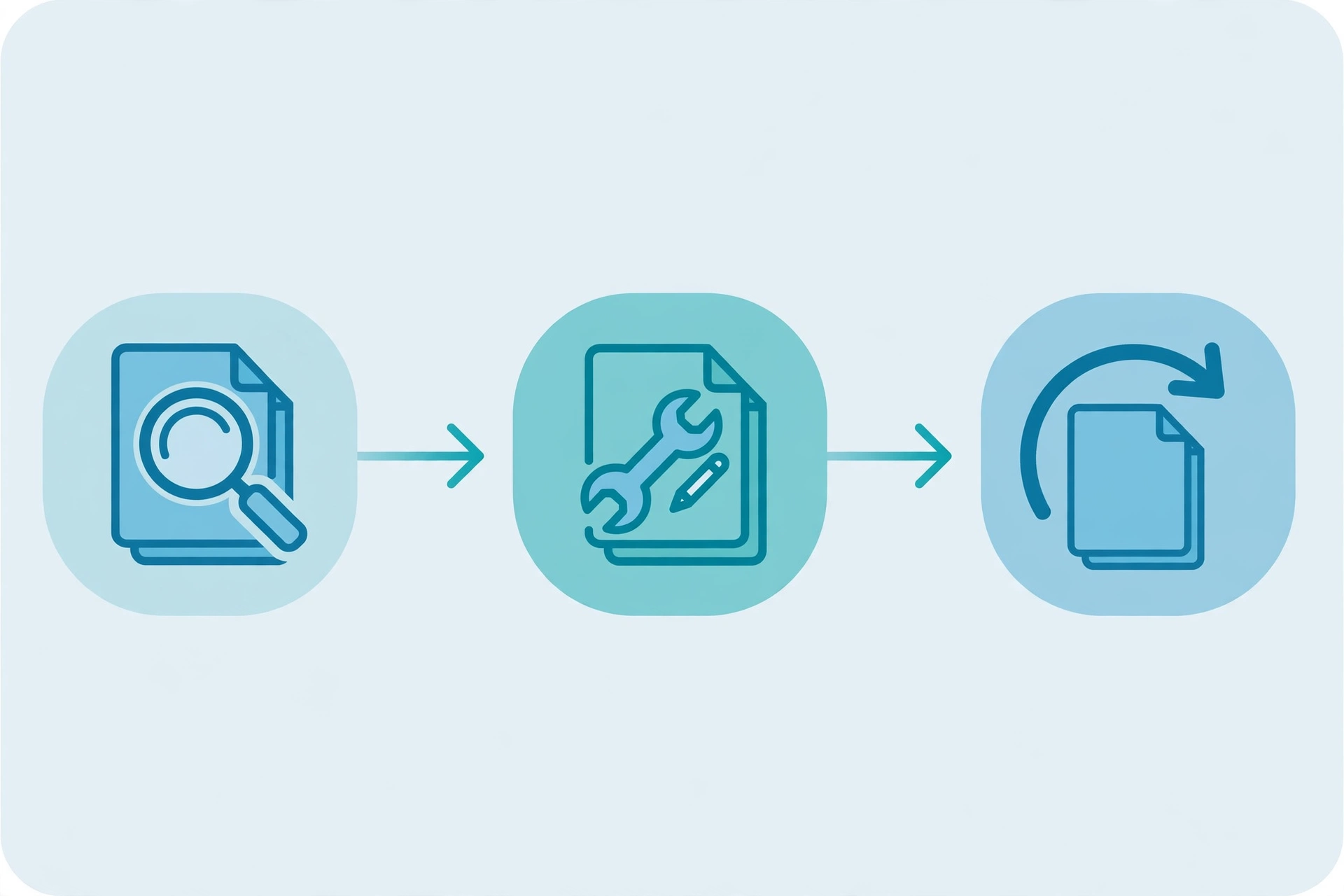
Most small practices do not need a full-time certified coder for every claim, but there are clear points where certified expertise pays for itself: adding a new specialty or service line, a denial rate climbing above 10 percent, an audit or records request, or providers consistently coding at the extremes of the E/M range. The test is simple: if the same errors keep appearing in your quarterly audit despite training, the problem is usually not effort — it is that no one on the team has the time or the current code-set knowledge to fix the root cause.
Incorrect or outdated codes, vague diagnoses, and missing modifiers together account for the largest share of coding-related denials. A pre-submission scrub checking all three catches more denials than any single fix.
Yes, in most cases. Send a corrected claim referencing the original claim number, not a brand-new claim, which will deny as a duplicate. Watch the timely filing deadline; a correction sent after it expires will not save the claim.
No. Upcoding can be an honest mistake — a coder choosing a higher code out of habit or a provider documenting incompletely. But repeated, systematic upcoding is treated by payers and auditors as a compliance problem, and it can lead to repayments and penalties. The safeguard is documentation: bill only the level the note proves.
Pull your denial report and sort by reason code and by procedure code. If the same denial reasons cluster around the same codes, providers, or payers, coding is the likely cause. A quarterly audit of ten claims per provider will usually confirm the pattern and point to the specific fix.
It depends on volume and complexity. Practices with a narrow, stable code set can often manage in-house with quarterly audits. Practices adding specialties or struggling with denial rates above 10 percent usually recover the cost of outsourced coding through fewer denials and faster payment.
Start with the table at the top of this post: pull your last 30 days of denials, sort them into these ten categories, and fix the largest category first. In most practices, that single fix — updating a picklist, adding a modifier rule, or tightening a documentation template — moves the denial rate more than a dozen small corrections combined.
If you would rather have that audit done for you, UMB and Coding offers a coding audit that reviews your claims against these ten errors, corrects the recurring causes, and sets up a quarterly review cadence. Call (201) 942-0949 or visit our contact page to schedule it.

Leave a comment