If you’re a mental health provider or medical practice owner, you’ve probably heard the word “credentialing” thrown around a lot. Maybe it sounds like just another piece of bureaucratic paperwork standing between you and treating patients. But here’s the truth: credentialing isn’t red tape — it’s the foundation your entire insurance revenue stream is built on.
Let’s break down what credentialing really means, why it matters so much, and what can go wrong if you skip it.
What Is Provider Credentialing, Really?
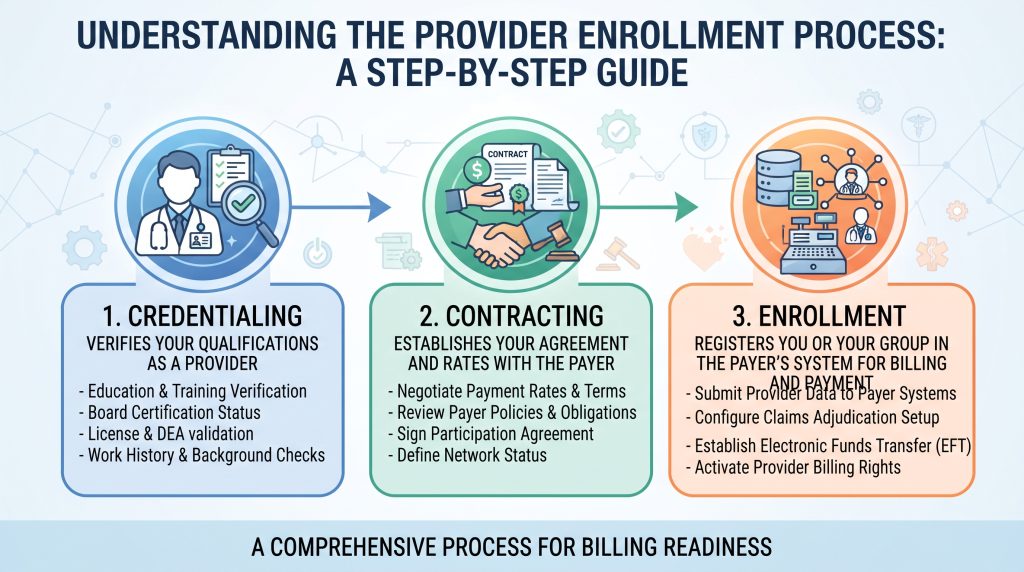
In simple terms, credentialing is how insurance companies verify that a healthcare provider is qualified, licensed, and legitimate enough to treat their members — and get paid for it.
Think of it this way: before Aetna, UnitedHealthcare, Cigna, or Medicaid will let you bill them for services, they need to confirm you are who you say you are. That means checking your license, education, specialty certifications, and work history against their standards.
For example, imagine a Psychiatric Mental Health Nurse Practitioner (PMHNP) opening a new practice who wants to accept major insurance plans. Before that practice can submit a single claim under the provider’s name, it typically has to go through each payer’s credentialing and enrollment process first.
No credentialing, no claims. It’s that simple.
5 Reasons Credentialing Should Be Your Top Priority
1. It Verifies You Meet Payer Standards
Insurance companies aren’t just checking a box — they’re confirming your license, education, specialty, certifications, and professional history meet their network requirements. This protects patients and gives payers confidence in who they’re working with.
2. It’s Your Ticket Into Insurance Networks
Credentialing is generally the first major step toward becoming an in-network provider. Once you’re approved and contracted, you may be able to treat plan members at contracted rates — opening the door to a much larger patient base.
3. It’s How You Actually Get Paid
This is the part that hits home for most providers: credentialing and enrollment establish your eligibility to bill a payer in the first place. Without proper approval, claims can be denied or simply not payable under your NPI or group arrangement — meaning the work you did doesn’t turn into revenue.
4. It Attracts More Insured Patients
Most patients want to use their insurance rather than pay out of pocket. Being in-network makes your practice accessible and appealing to a much wider pool of potential clients.
5. It Helps You Build and Scale Your Practice
Credentialing isn’t a one-time hurdle — it’s an ongoing part of growing your business. It allows you to pursue new payer contracts, expand your patient base, and build a predictable, sustainable billing workflow as your practice grows.
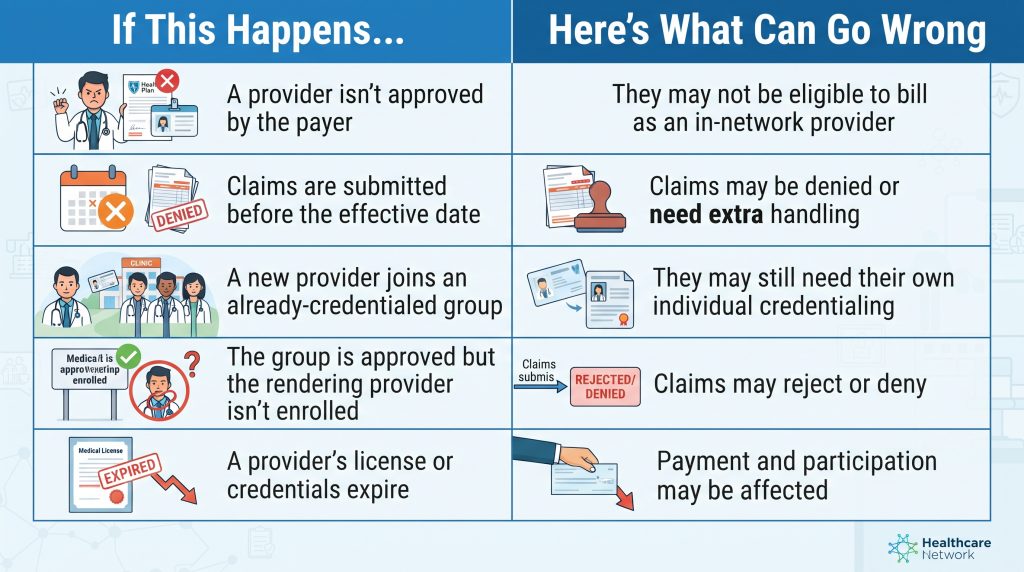
What Happens If You Skip Credentialing (or Get It Wrong)?
Here’s where a lot of practices run into trouble. Credentialing mistakes don’t just cause delays — they can directly hit your bottom line.


Leave a comment