- info@umbandcoding.com
- 201-942-0949
Enrolling as a New Jersey Medicaid provider opens the door to roughly one in five state residents covered through NJ FamilyCare — but enrollment is not a single form, and it is not the same thing as being in-network with the health plans those members actually carry. Providers who treat the two steps as one often learn the difference the hard way: a claim denied because the rendering provider was never contracted with the member’s managed care organization (MCO), even though the practice is enrolled with the state.
This guide walks through New Jersey Medicaid provider enrollment step by step: state enrollment through NJMMIS, contracting with each NJ FamilyCare MCO, the documents you will need, realistic timelines, and the New Jersey-specific delays that stall applications most often. If you would rather hand the paperwork to a team that does this every week, UMB and Coding’s medical coding and credentialing services cover enrollment, CAQH management, and payer contracting for New Jersey practices.
NJ FamilyCare is New Jersey’s Medicaid program, administered by the Division of Medical Assistance and Health Services (DMAHS) within the Department of Human Services. Most members receive their care through managed care rather than fee-for-service Medicaid, which means DMAHS contracts with private MCOs to deliver benefits, coordinate care, and pay claims.
That structure is the single most important thing to understand before you apply. State enrollment makes you an eligible New Jersey Medicaid provider. It does not, by itself, put you in any MCO’s network. You need both layers: enrollment with the state, and a contract with each MCO whose members you plan to see.
Five managed care organizations currently serve NJ FamilyCare members. Plan availability can vary by county, and members choose among the plans available where they live — so a practice that serves patients across northern New Jersey will typically need contracts with more than one plan.
| NJ FamilyCare MCO | What to know before you apply |
|---|---|
| Horizon NJ Health | The largest NJ FamilyCare plan by membership; usually the first contract new practices pursue in northern and central New Jersey. |
| Aetna Better Health of New Jersey | Aetna’s Medicaid plan in the state; runs its own credentialing and contracting process separate from Aetna commercial. |
| UnitedHealthcare Community Plan | UnitedHealthcare’s Medicaid plan; do not assume a commercial UnitedHealthcare contract covers Medicaid members. |
| Wellpoint | Formerly Amerigroup New Jersey; if older paperwork or directories still say Amerigroup, it is the same plan under its new name. |
| Fidelis Care | The newest of the five NJ FamilyCare plans; check county availability, since not every plan serves every county. |
Prioritize by your patient panel, not alphabetically. Look at which plans your existing patients carry, which plans dominate your county, and which referral sources send you Medicaid patients — then work that list in order. Each MCO credentialing application is separate, with its own forms, timelines, and committee dates.
State enrollment runs through NJMMIS, the New Jersey Medicaid Management Information System, whose fiscal agent is Gainwell Technologies. The broad sequence is the same for most provider types, though the exact forms depend on whether you are enrolling as an individual practitioner, a group, or a facility.
For a detailed walkthrough of the CAQH side of this process, see our guide to CAQH credentialing in 2026.
Exact requirements vary by provider type, but assembling this packet before you start will save weeks of back-and-forth:
One practical tip: check the expiration dates on every document before you submit. A license or insurance certificate that expires mid-review can bounce an otherwise complete application back to the start of the queue.

There is no single published turnaround that holds for every provider type and plan, so plan conservatively and start early — ideally four to six months before you need to see Medicaid patients at full volume. The table below reflects how the timeline typically breaks down.
| Stage | Typical timeline | What drives the variation |
|---|---|---|
| CAQH profile completion and attestation | 1–3 weeks | Missing documents, unanswered attestations, or an outdated profile |
| NJMMIS state enrollment review | 60–90 days | Provider type, completeness of the packet, and reviewer follow-up |
| Each MCO credentialing and contracting | 60–120 days per plan | Committee schedules, plan-specific requirements, and whether applications run in parallel |
| Full readiness (state + key MCOs) | 4–6 months | Running plan applications in parallel, rather than one at a time, is the biggest time-saver |
The key insight is in the last row: because each MCO runs its own process, sequential applications multiply the wait. Submit to your priority plans in parallel once your CAQH profile is clean, and track each plan’s status separately. Our 2026 credentialing timelines by payer explain how committee cycles and primary-source verification stretch these windows.
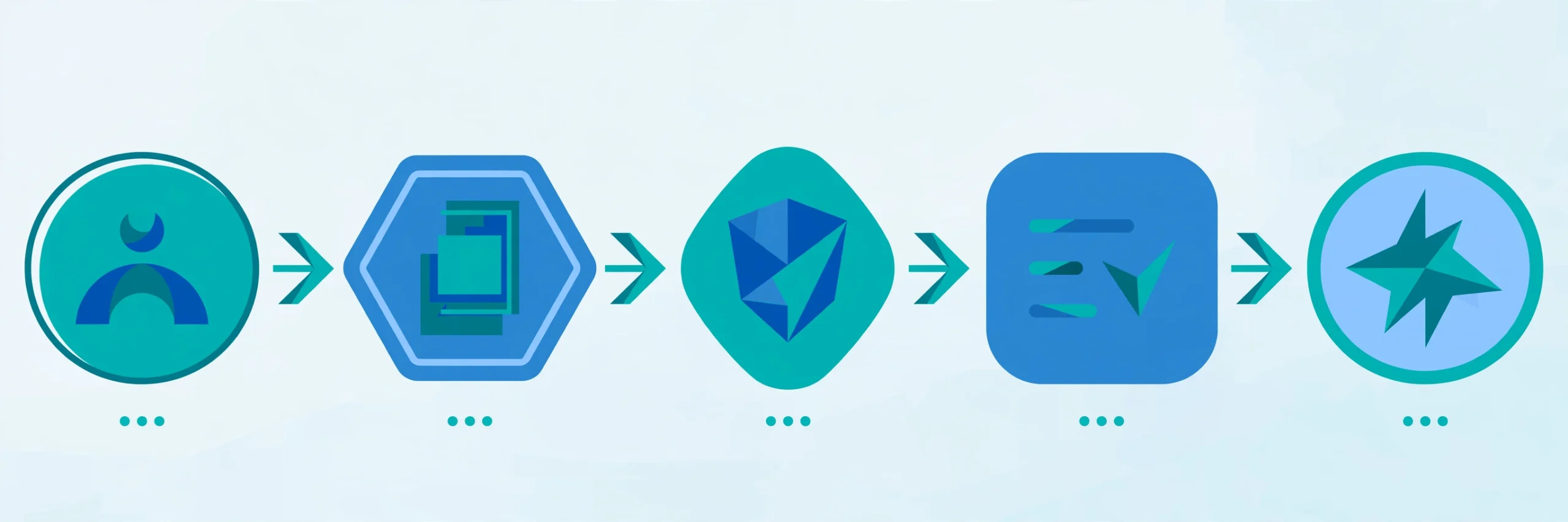
Most delays are administrative, not clinical — and most are preventable.
Treating state enrollment as network participation. This is the costliest misunderstanding in New Jersey Medicaid. A practice enrolls with NJMMIS, starts seeing NJ FamilyCare patients, and only discovers at claim time that it has no contract with the member’s MCO. Verify plan-by-plan network status before the first visit, not after the first denial.
An unattested or stale CAQH profile. CAQH requires re-attestation every 120 days. A profile that lapses mid-review can freeze every pending plan application simultaneously, and the fix — re-attesting and re-authorizing each plan — restarts clocks you thought were already running.
NPI and location mismatches. If the rendering provider’s Type 1 NPI is not linked to the group’s Type 2 NPI and tax ID for that location, claims deny even when everyone involved is credentialed. Check the linkage for every location, not just the main office.
Expired documents during review. Enrollment reviews take months. A license, DEA registration, or insurance certificate that expires while the file is pending will generate a new request and a new wait. Calendar every expiration against your application timeline.
Starting too late. Practices that apply when they already need Medicaid revenue are already behind. Build enrollment into your opening or expansion timeline the way you would build a lease or a hire — months ahead, not weeks.
Approval is the starting line, not the finish. Before you open the schedule to NJ FamilyCare members, confirm each MCO’s effective date in writing, verify that your providers appear correctly in each plan’s directory, and test eligibility verification for a Medicaid member in each plan. Train your front desk to check the specific plan on the member’s card — “NJ FamilyCare” alone does not tell you which network the patient belongs to.
Then protect the enrollment you worked for. Re-attest CAQH on schedule, update NJMMIS and every plan promptly when providers join, leave, or change locations, and keep licenses and insurance current in every system at once. Lapses in maintenance are how good enrollments quietly turn into denied claims months later.
Yes. NJ FamilyCare is the name for New Jersey’s Medicaid program, administered by DMAHS. Most members receive benefits through one of five managed care organizations rather than through fee-for-service Medicaid.
No. State enrollment through NJMMIS makes you an eligible New Jersey Medicaid provider, but each MCO — Horizon NJ Health, Aetna Better Health, UnitedHealthcare Community Plan, Wellpoint, and Fidelis Care — runs its own credentialing and contracting process. You must contract with each plan separately.
Plan on four to six months for full readiness with your priority plans. State enrollment review commonly takes 60–90 days, and each MCO’s credentialing and contracting typically takes 60–120 days. Running plan applications in parallel, rather than sequentially, shortens the total timeline.
In practice, yes. Most NJ FamilyCare MCOs pull credentialing data from CAQH ProView, so a complete, attested profile with each plan authorized is effectively a prerequisite for plan contracting — and a lapsed attestation can stall every pending application at once.
Claims for dates of service before your in-network effective date with that member’s specific plan will typically deny, even if your state enrollment is active. Confirm each plan’s effective date in writing before scheduling members under that plan.
New Jersey Medicaid enrollment rewards practices that treat it as two parallel tracks — state enrollment through NJMMIS and contracting with each NJ FamilyCare MCO — and that start early, keep CAQH current, and verify network status plan by plan. Do that, and NJ FamilyCare becomes a stable, high-volume payer mix rather than a source of denied claims.
If enrollment paperwork is pulling your team away from patients, UMB and Coding can run it for you: state enrollment, CAQH management, MCO credentialing, and the billing that follows once you are in-network. Call (201) 942-0949 or visit our contact page for a free credentialing review.

Leave a comment