- info@umbandcoding.com
- 201-942-0949
Primary care is the highest-volume corner of outpatient medicine, and its billing is where the most revenue quietly leaks. A primary care physician (PCP) may see 20 or more patients a day, and every one of those visits has to be coded, documented, and billed correctly — often with a preventive service and a problem-oriented service happening in the same appointment. When the coding is right, the practice gets paid for the full scope of the work. When it is wrong, the claim is downcoded, denied, or paid at a fraction of what the visit was worth, and the pattern repeats dozens of times a week. This guide explains what makes PCP billing different, how E/M levels, preventive visits, and modifier 25 work together, where chronic-care and wellness revenue comes from, and the denial triggers that cost primary care practices the most. If your team would rather hand billing to specialists, that is what our medical billing services handle.
Primary care billing is different from specialty billing in three ways, and all three raise the stakes on accuracy. First, the volume is high: a PCP’s day is built from short, back-to-back encounters, so a single recurring coding mistake multiplies across hundreds of claims a month. Second, the visit mix is wide: the same schedule holds new-patient visits, established-patient follow-ups, preventive exams, chronic-disease management, same-day sick visits, and telehealth — each with its own coding rules. Third, the payment mix is broad: a primary care panel usually spans commercial plans, Medicare, and Medicaid, and each payer applies its own rules to the same codes.
The financial shape of a primary care practice makes accuracy matter even more. Individual visit payments are modest compared with procedural specialties, so the practice’s margin comes from volume and from capturing every billable element of each visit — the preventive exam and the problem addressed in the same appointment, the chronic-care coordination that happens between visits, the wellness visit that Medicare pays for separately. A practice that bills only the obvious part of each encounter leaves a meaningful share of its revenue on the table, month after month.
Most primary care revenue runs through evaluation and management (E/M) codes: 99202–99205 for new patients and 99212–99215 for established patients. Since the 2021 E/M overhaul, the level is chosen by medical decision making (MDM) or by total time spent on the date of the encounter — not by counting history and exam elements. For primary care, that change was good news: the level now reflects the complexity of the thinking, not the length of the note.
MDM has three elements, and the level is set by the two highest of the three: the number and complexity of problems addressed, the amount and complexity of data reviewed and analyzed, and the risk of complications or morbidity from management. In practical terms, a stable chronic condition managed with a prescription refill is a lower-complexity problem than an undiagnosed new problem with an uncertain prognosis, and a visit that involves ordering and reviewing tests, discussing management with another clinician, or deciding on a treatment with meaningful risk scores higher than one that does not.
| E/M level | Patient type | MDM level | Typical primary care example |
|---|---|---|---|
| 99202 / 99212 | New / established | Straightforward | Minor, self-limited problem; brief follow-up with no data review |
| 99203 / 99213 | New / established | Low | Stable chronic illness follow-up; acute uncomplicated illness |
| 99204 / 99214 | New / established | Moderate | Chronic illness with exacerbation; two or more stable chronic illnesses |
| 99205 / 99215 | New / established | High | Chronic illness with severe exacerbation; drug therapy requiring intensive monitoring |
Time-based selection is the alternative, and it is often the right choice for primary care visits that run long because of counseling, coordination, or a complex discussion — for example, a new-patient visit where the physician spends most of the time taking a detailed history and explaining a new diagnosis. The total time on the date of the encounter counts, including non-face-to-face work on that day such as reviewing records and documenting, but it must be documented with the actual minutes. A common error is coding by time without recording the time at all; without it, the claim cannot be defended on audit.
The most expensive level-selection mistake in primary care is the opposite one: defaulting to a level out of habit. A practice where every established-patient visit is coded 99213 regardless of complexity is underbilling the moderate and high-complexity visits — and a practice where every visit is coded 99214 is inviting an audit. The level should follow the note, visit by visit. If your E/M distribution looks flat — nearly all visits at one level — that is a sign the selection process needs review, not a sign that every patient is equally complex.
Preventive medicine exams are billed with their own code family — 99381–99387 for new patients and 99391–99397 for established patients, selected by the patient’s age. These codes cover a comprehensive preventive exam: age-appropriate history and examination, counseling, guidance, risk-factor reduction, and ordering of preventive screening. For most commercial plans and many Medicaid plans, the preventive visit itself is covered with no patient cost-sharing when it is billed as preventive care.
The revenue problem is that real preventive visits are rarely purely preventive. A patient comes in for an annual physical and mentions a new symptom, or the physician finds an abnormal blood pressure or a skin lesion that needs workup. When a significant, separately identifiable E/M service is performed on the same day as the preventive exam, both can be billed: the preventive code plus the appropriate office E/M code with modifier 25 attached to the E/M code. Modifier 25 signals that the E/M service was separate and significant — above and beyond the work already included in the preventive exam.
The key word is significant. A brief mention of a minor issue that requires no additional work does not support a separate E/M code. But a new problem that requires its own history, examination, decision making, and plan — ordering labs, starting a medication, arranging a referral — does. The documentation must show two distinct services: the preventive exam elements and the separate problem-oriented work, each with its own findings and plan. Payers deny the modifier 25 claim when the note reads like a single preventive visit with a problem mentioned in passing.
Two practical rules keep this clean. First, diagnose separately: the preventive code carries the preventive diagnosis (such as Z00.00, encounter for general adult medical examination without abnormal findings, or Z00.01 when abnormal findings are present), while the E/M code carries the diagnosis for the problem addressed. Second, never use modifier 25 as a routine add-on. If it appears on nearly every preventive visit, the pattern itself becomes an audit flag. Used when the documentation genuinely supports it, modifier 25 is one of the largest legitimate revenue recoveries available to a primary care practice; used reflexively, it is one of the most common reasons for takebacks.
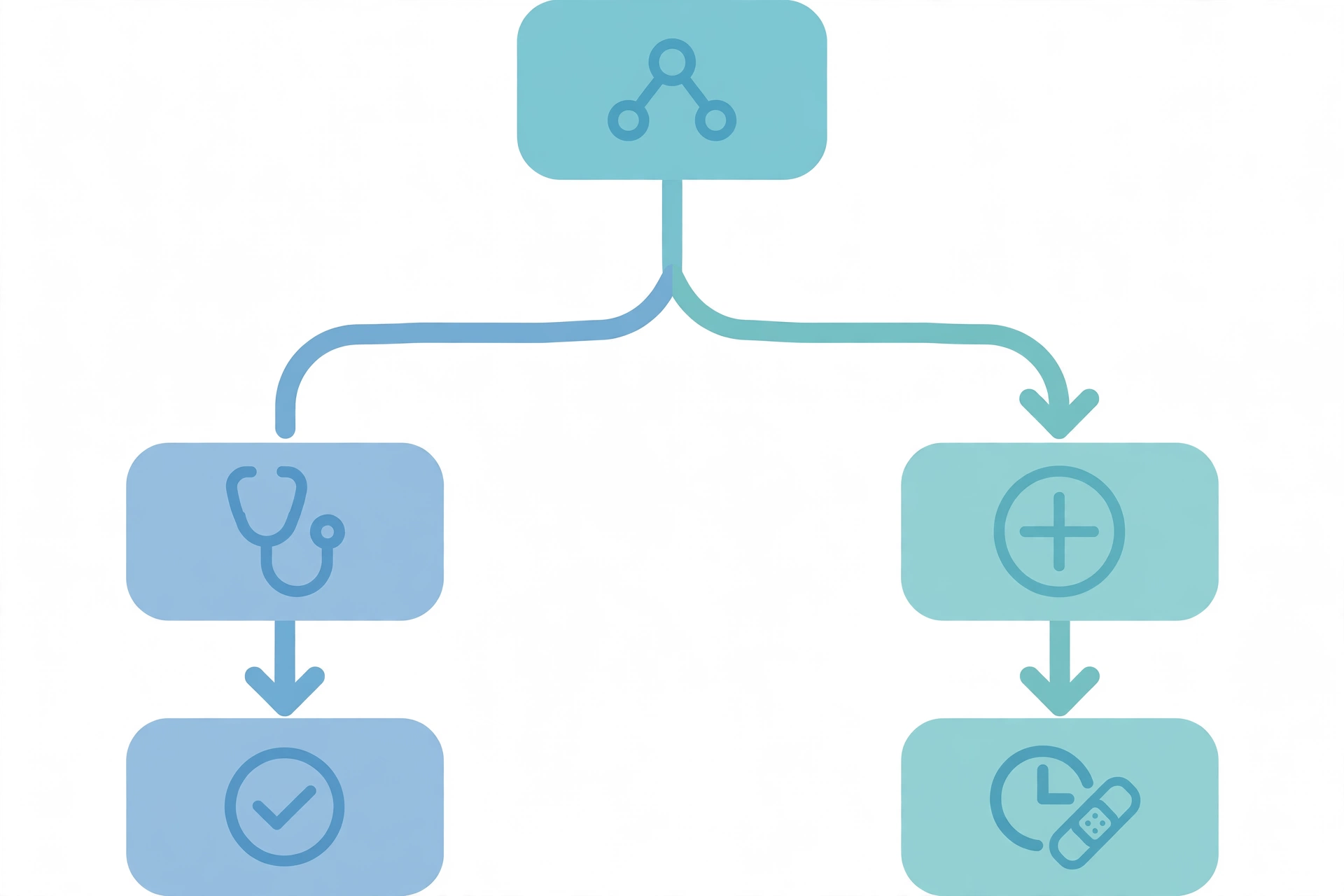
Two service lines outside the standard office visit add real revenue to a primary care practice — and both are underused because their rules are easy to get wrong.
Chronic care management (CCM) pays for the work that happens between visits for patients with two or more chronic conditions expected to last at least 12 months. The base code, 99490, covers 20 or more minutes of non-face-to-face care coordination in a calendar month: reviewing records, coordinating with specialists, managing medications, and following up with the patient. The work must be documented with the time spent, the patient must have consented (verbal consent documented in the chart is generally sufficient for Medicare), and the care plan must be established, implemented, revised, or monitored. Practices that already do this coordination informally are often doing unpaid work; CCM is the mechanism that pays for it. The companion service, transitional care management (TCM, 99495–99496), covers the higher-intensity work after a hospital or skilled-nursing discharge, with a required interactive contact within two business days and a face-to-face visit within 7 or 14 days depending on complexity.
Annual wellness visits (AWVs) are the Medicare counterpart to the preventive exam, and they are billed separately from it. G0438 is the initial AWV and G0439 is the subsequent annual visit. Unlike a preventive exam, the AWV is a health risk assessment and prevention planning visit — it does not include a hands-on physical examination, which is a common point of confusion. A problem addressed during the AWV can also be billed with modifier 25, using the same separate-and-significant standard as a preventive visit. Because Medicare pays for the AWV, practices with a large Medicare panel that schedule and track AWVs systematically — rather than waiting for patients to ask — see a steady, predictable revenue line.
| Service | Code(s) | What it pays for | Common mistake |
|---|---|---|---|
| Preventive exam | 99381–99397 | Comprehensive preventive visit by age | Billing a problem as part of the exam instead of separately with modifier 25 |
| Annual wellness visit | G0438 / G0439 | Medicare health risk assessment and prevention plan | Treating it as a physical exam; missing the same-day problem visit |
| Chronic care management | 99490 | 20+ minutes of monthly care coordination for 2+ chronic conditions | Not tracking time or consent, so the work goes unbilled |
| Transitional care management | 99495 / 99496 | Post-discharge coordination and timely follow-up visit | Missing the 2-business-day contact or the 7/14-day visit window |

Most primary care denials are not mysteries. They cluster around a handful of repeatable errors, and each has a straightforward fix.
Eligibility and coverage lapses. Primary care panels turn over constantly — patients change jobs, plans, and Medicaid eligibility. A visit billed to a plan that no longer covers the patient denies outright. Verifying coverage and benefits before the visit, including the preventive benefit and any deductible status, prevents the most common denial in the practice. Eligibility checks are part of the intake workflow, not a billing-department rescue.
Modifier 25 denials. As above, the payer’s most frequent objection is that the note does not show a separately identifiable service. The prevention is documentation discipline: a distinct assessment and plan for the problem, its own diagnosis code, and no copy-paste from the preventive exam section.
Preventive vs. diagnostic coding errors. Screening services and diagnostic services are coded differently, and payers deny when the two are mixed up — for example, billing a diagnostic test with a screening diagnosis, or billing a screening with a symptom diagnosis. The rule of thumb: if the patient has symptoms, it is diagnostic; if there are no symptoms and the test is routine, it is screening. Getting this wrong also matters for the patient, because it can turn a no-cost preventive service into a bill with cost-sharing.
Missing or wrong referrals and authorizations. Some plans require a referral or prior authorization for services the PCP orders — imaging, certain labs, specialist referrals. When the ordering clinician assumes the referral is in place and it is not, the downstream claim denies. A pre-visit check on referrals and authorizations, especially for new-patient panels, closes this gap.
Timely filing. High-volume practices generate a long tail of claims that need follow-up, and the ones that sit in a work queue past the payer’s filing deadline are lost entirely. Timely filing limits vary by payer and are often shorter than practices expect. A weekly aging review that flags claims approaching their filing limit is the cheapest denial prevention there is — a claim filed on time can be appealed; a claim filed late usually cannot.
Credentialing problems sit underneath all of these: a PCP who is not yet enrolled with a payer, or whose enrollment lapsed, will see claims deny no matter how clean the coding is. Keeping enrollment current — CAQH attested, NPI and taxonomy correct, roster updated when a clinician joins — is the foundation the rest of the billing depends on. Our medical coding and credentialing services cover enrollment and revalidation for primary care practices, including the commercial, Medicare, and Medicaid panels a PCP needs.
For a practice owner or office manager, the PCP billing system comes down to a short weekly discipline. Confirm eligibility before the visit. Code the E/M level from the note — MDM or time, documented either way. When a preventive or wellness visit includes a real problem, document it separately and bill it with modifier 25. Track CCM time and TCM windows so between-visit work is paid. Review aging claims weekly so nothing dies on timely filing. And keep every clinician’s credentialing current, because no coding fix rescues a claim from an unenrolled provider.
Most primary care practices do not have a revenue problem — they have a capture problem. The visits are happening, the work is being done, and the documentation usually exists. What is missing is the coding and follow-up discipline that turns the work into paid claims. Put that discipline in place and the same schedule, with the same patients, pays noticeably more.
PCP billing is the coding, submission, and follow-up of claims for primary care services — office visits (E/M codes 99202–99215), preventive exams (99381–99397), Medicare annual wellness visits (G0438/G0439), and care-coordination services such as chronic care management (99490). It covers the full revenue cycle for a primary care practice, from eligibility verification to denial management.
Yes. When a significant, separately identifiable problem-oriented service is performed during a preventive exam, bill the preventive code plus the appropriate E/M code with modifier 25. The documentation must show the separate problem work — its own history, examination, decision making, and plan — and the two services should carry different diagnosis codes.
An annual wellness visit (G0438/G0439) is a Medicare health risk assessment and prevention planning visit; it does not include a hands-on physical examination. A preventive exam (99381–99397) is a comprehensive physical examination. They are billed with different code families, and a problem addressed during either visit can be billed separately with modifier 25 when the documentation supports it.
For patients with two or more chronic conditions expected to last at least 12 months, CCM code 99490 covers 20 or more minutes of non-face-to-face care coordination per calendar month — record review, specialist coordination, medication management, and patient follow-up. The time must be documented and patient consent recorded. Transitional care management (99495/99496) covers the more intensive coordination after a hospital discharge, with a contact within two business days and a face-to-face visit within 7 or 14 days.
The most common triggers are eligibility or coverage lapses, modifier 25 denials where the note does not show a separately identifiable service, preventive-versus-diagnostic coding errors, missing referrals or authorizations, timely filing misses, and credentialing gaps — a provider not enrolled or not yet effective with the payer. Most are preventable with a pre-visit eligibility check, documentation discipline, and a weekly aging review.
If your primary care practice is losing revenue to denials, downcoding, or unbilled care coordination, contact UMB & Coding for a free practice audit — or call (201) 942-0949. We handle billing and credentialing for primary care practices so every visit gets paid.


Leave a comment