- info@umbandcoding.com
- 201-942-0949
A returned credentialing application is not a rejection of your qualifications. Most of the time it is an administrative problem: a blank field, a name spelled one way on the application and another way in CAQH, a malpractice certificate that expired last month. Any of these can send your application back before a payer ever reviews your credentials. The fix is usually small, and a clean resubmission moves faster than the first application did. This guide walks through the nine most common reasons therapist applications come back, and gives you a pre-submit checklist so the next one goes through the first time. If you would rather not resubmit alone, our credentialing services for therapists handle the correction, re-attestation, and payer follow-up for you.
For the six-step panel process itself, see our guide to how to get credentialed as a therapist.
Classify what happened before you touch a form, because each outcome calls for a different response. A returned application was never reviewed on its merits: the payer found it incomplete, inconsistent, or missing a document, and sent it back for correction. A denied application was reviewed and the payer decided not to credential you — for example, on the basis of a licensing action. A denial usually comes with a formal appeal process and a deadline. A stalled application is neither: you have heard nothing, and the file is sitting in a queue, often because of a small defect nobody has told you about. Stalled applications are fixed by follow-up, not by resubmitting.
A fourth outcome causes the most confusion: the closed panel. The payer is not accepting new providers in your specialty or area right now — a capacity decision, not a judgment on your qualifications, with no formal appeal; you can ask for reconsideration instead (Fix 8). Resubmitting a denied application as if it were returned wastes the appeal window; appealing a returned application wastes weeks.
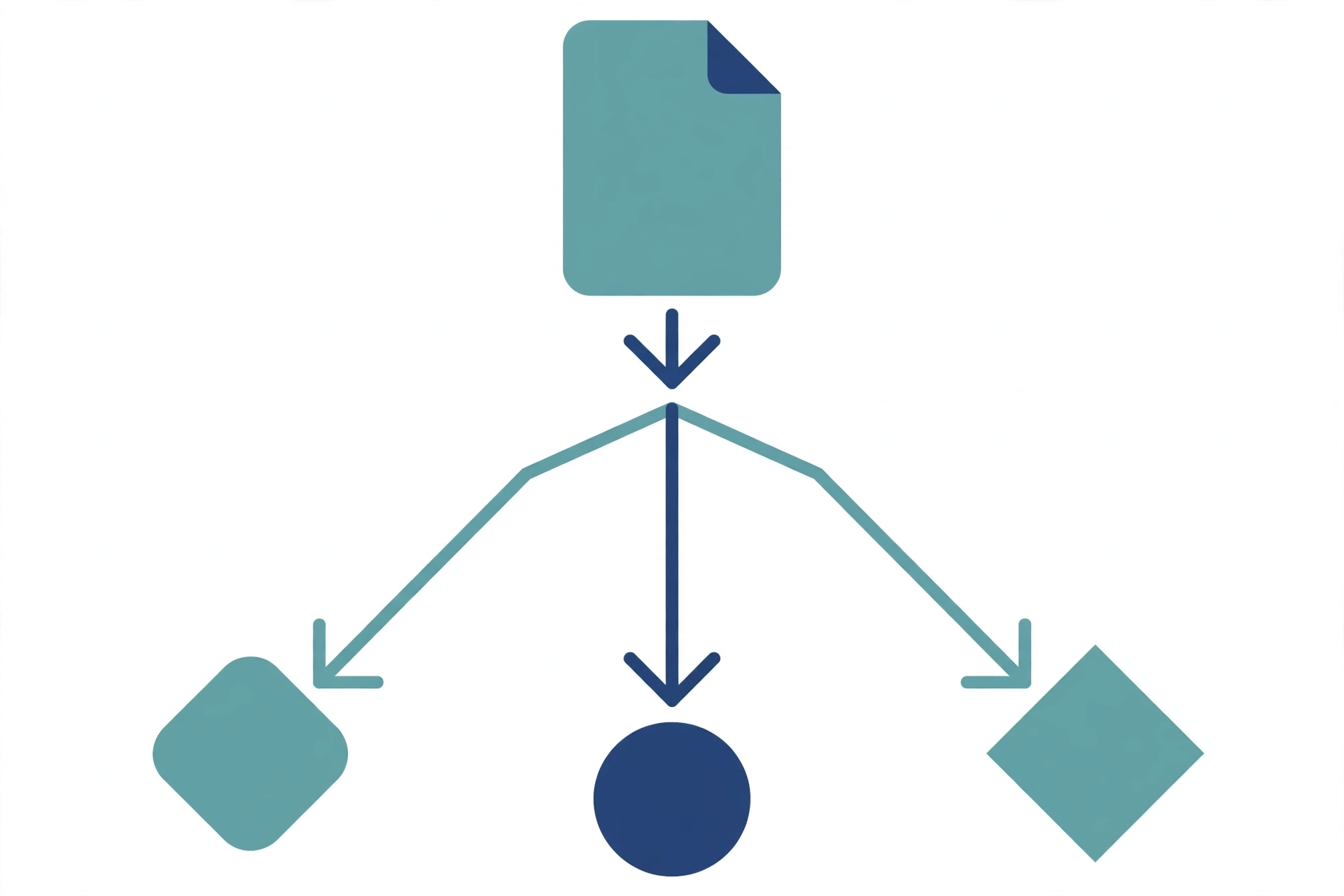
Each fix follows the same pattern: the cause, what to check, and the fix. Work through them in order — the first four account for most returns.
A blank field, a missed signature, or a question left unanswered instead of “N/A” — the payer returns the whole application rather than guessing what you meant. The return letter usually names the exact page and field. Fix it, sign and date every signature block, mark every non-applicable question “N/A”, and re-check the whole application line by line before resubmitting.
Your name, Type 1 NPI, taxonomy code, and tax ID must match exactly on the application, CAQH, NPPES, and your state license. A middle initial on one document and not another triggers a verification hold and a return. Compare all four sources side by side and correct the one that is wrong — usually NPPES or CAQH. Do not “fix” the application to match a wrong registry entry; the payer verifies against the registry.
Most commercial payers pull your file from CAQH ProView instead of their own paper application. If your profile is incomplete, your attestation has lapsed past 120 days, or you never authorized that payer to view it, the payer cannot pull your file and the application goes back. Confirm the profile is complete, the attestation is current, and the payer is authorized — then fix what is missing and re-attest. Our CAQH credentialing step-by-step guide covers the four profile mistakes that stall enrollment most often.
License, malpractice face sheet, DEA registration if you hold one, diploma, and CV — payers want current copies of all of them. An expired license, a malpractice declarations page from last year, or a document uploaded to the wrong section of CAQH will all bounce the application. Replace what is expired, upload what is missing, and re-attest CAQH so the payer pulls the updated profile.
Any unexplained gap in your work history — a few months between jobs, or private practice with no employer listed — generates a verification question, and the application waits while the payer asks it. Dates that differ between your CV and CAQH have the same effect. Walk both month by month and flag every gap and mismatch. Explain each gap when you apply — a short line (“private practice, self-employed, 2023–2024”) is enough — and make the dates identical everywhere.
A malpractice claim, settlement, licensing board action, or privilege issue is not automatically disqualifying — but an unexplained one is. If your answer about malpractice history is blank, vague, or inconsistent with what the payer’s verification finds, the application comes back. Compare your answers with the records the payer will pull, answer each disclosure question directly, and attach a brief, factual explanation for each event.
Many payers run behavioral health credentialing on a separate track from medical credentialing — sometimes through a carve-out or a different department. A therapy application sent through the medical pathway can be returned, or quietly routed into the wrong queue and stalled. A related trap is enrolling under a previous group’s tax ID after you have moved practices. Confirm with provider services which pathway applies to your license and specialty, and which tax ID your application is filed under — then refile on the right track, under the right tax ID.
The panel is closed to new providers in your specialty or area, so resubmitting the same application changes nothing — the decision was about capacity, not your file. Ask provider services what would change it: a documented access need in your area, a language or specialty your community lacks, or a referral relationship with an existing in-network group. Then build a reconsideration case instead of a new application — a short letter documenting the access gap your practice fills and any referral ties to the payer’s network. Meanwhile, credential with the open panels that cover the same client base, and re-check the closed panel’s status every few months.
Most second returns happen because the resubmission was sloppy: the correction was made on the form, but CAQH was never re-attested, the payer was never re-authorized, or nobody recorded the new reference number. Before resubmitting, confirm the correction is in place, CAQH is re-attested, and you have the original reference number. Resubmit with a cover note naming the original reference number and what was corrected, log the new reference number and date, and follow up within a week to confirm the application is complete and in queue. See our guide to how long provider credentialing takes for payer-by-payer timelines.

Run the table below as a literal checklist — one row at a time — before you submit or resubmit. It takes about fifteen minutes and catches nearly every return in this guide, and the highest-value check is the second row: name, NPI, taxonomy, tax ID, and address compared across application, CAQH, NPPES, and license.
| Fix | What to verify before the application leaves your practice |
|---|---|
| 1. Completeness | Every field answered or marked “N/A”; every signature block signed and dated |
| 2. Consistency | Name, NPI, taxonomy, tax ID, and address identical on application, CAQH, NPPES, and license |
| 3. CAQH | Profile complete, attestation current, payer authorized to view it |
| 4. Documents | License, malpractice face sheet, DEA, diploma, and CV current and attached in the right place |
| 5. Work history | No unexplained gaps; dates identical on CV, CAQH, and application |
| 6. Disclosures | Every malpractice or licensing question answered, with a factual explanation attached |
| 7. Pathway | Behavioral health track confirmed; tax ID matches the practice you will bill under |
| 8. Panel status | Panel confirmed open — or a reconsideration case prepared if it is closed |
| 9. Resubmission | Cover note with original reference number; new reference number logged; follow-up dated |
A returned application restarts the clock, and the weeks in between are where therapists lose money. The rule that matters most: do not bill the payer until your enrollment is active and you have an effective date in writing. Claims for sessions held before the effective date will deny, and that denial is generally not appealable — so do not bill under a pending provider, or borrow another provider’s NPI to get claims through.
What you can do is keep seeing clients on a private-pay basis while the application is pending — many therapists do exactly this — and tell those clients honestly that in-network billing will begin once the payer confirms your effective date. Confirm the payer has your corrected file, keep your CAQH attestation current, and set a follow-up date. If a week passes with no confirmation of receipt, call. Silence usually means a small defect, not a decision.
Some returns are worth fixing yourself — a blank field or an expired certificate takes an afternoon. Others are worth handing off: an application returned twice, a file with a malpractice disclosure, a group enrollment tangled across two tax IDs, or a panel that needs a reconsideration case. The difference is the follow-up: a credentialing team does the same corrections, but it also chases the case until it is closed — calling on a schedule, logging every reference number, and confirming in writing that the application is complete and in queue.
No team can promise approval or a fixed timeline — payers decide both — but a team can promise the file will not sit untouched. If your application has already come back once, outside help usually pays for itself.
Rarely because a provider “isn’t qualified.” Most returns and denials come down to administrative problems: blank fields, mismatched NPI or tax ID, an expired CAQH attestation, missing or expired documents, or an application sent to a closed panel. A return asks for a corrected file; a true denial is a decision on your qualifications, usually with a formal appeal process.
The correction itself is often quick — days, for a blank field or an expired document. But the payer’s review clock usually restarts when the corrected application is received, so the total wait depends on the payer. Plan on the same payer-dependent ranges as a first application, and follow up within a week.
No — not under that payer, and not under another provider’s NPI. Claims for sessions held before your effective date will deny and are generally not appealable. You can see clients on a private-pay basis while it is pending.
It means the payer is not accepting new providers in your specialty or area right now — a capacity decision, not a judgment on your qualifications. There is no formal appeal, but you can ask for reconsideration by documenting an access need your practice fills.
No. A return is an administrative correction, not a mark against your qualifications, and payers expect it. What hurts is a second return for the same error, or a resubmission that was never followed up on. Fix the flagged item, re-attest CAQH, and track the new reference number.
A returned credentialing application is a paperwork problem with a paperwork solution. Classify the payer’s response first, work the nine fixes in order, run the pre-submit checklist, and follow up until you have an effective date in writing. Most therapists who fix the flagged item once and track the resubmission get through on the second attempt.
If your application has already come back twice, or the file involves a disclosure or a closed panel, let a team take the resubmission over — corrections, CAQH re-attestation, and follow-up until the case is closed. Call (201) 942-0949 or reach out through our contact page to get started.


Leave a comment